
Breakage ends here!

If your hair feels thinner, looks frayed at the ends, or never seems to retain length no matter how much it grows — you’re likely dealing with hair breakage, not slow growth.
The good news is that breakage is preventable. It also can be reversible with the right habits.
Let’s talk about it.

What Is Hair Breakage?
Hair breakage happens when the hair shaft snaps due to weakness or damage. Unlike shedding (which happens from the root), breakage occurs along the strand — often leaving behind split ends, uneven layers, and flyaways.
Common signs include:
Short, broken pieces of hair on your clothes or sink
Split or frayed ends
Thinning edges
Rough, dry texture
Hair that won’t retain length
What Causes Hair Breakage?
Hair becomes fragile when the moisture and protein balance in it is disrupted. Here are the biggest culprits:
1. Excessive Heat Styling - Flat irons, curling wands, and blow dryers weaken the protein structure of hair over time — especially without heat protectant. Hair starts to fuse together at 400 degrees! Lower that heat and always use a heat protectant!
2. Chemical Processing- Relaxers, bleach, and frequent coloring lift the hair cuticle and reduce elasticity, making strands more prone to snapping.
3. Over-Manipulation- Tight hairstyles, constant brushing, rough detangling, and heavy extensions create tension and stress on the hair shaft. Also, if you have a tendency to twirl or play with your hair, this can contribute to breakage as well.
4. Lack of Moisture- Dry hair breaks. Without proper hydration, strands lose flexibility and snap under pressure. Your hair is made of 97% protein and 3% water. This means too little moisture leaves your hair dehydrated and lacking what it needs most.
5. Protein Overload or Deficiency- Too much protein can make hair stiff and brittle. Too little can make it weak and overly soft. Balance is key. You might be using a shampoo that has protein in it but is marketed as “hydrating.” Make sure to check the ingredients in your products before applying them to your hair.
6. Environmental Damage- Sun exposure, wind, and pollution slowly degrade the hair’s outer layer. Oftentimes, our everyday habits can contribute to breakage as well. For example, riding in the car with the windows down can cause split ends. Or wearing your purse on the same shoulder every time and your hair gets caught in it. If you are experiencing breakage in a specific area, it might be worthwhile to examine your habits first to see if something environmental is causing the damage.
The Science
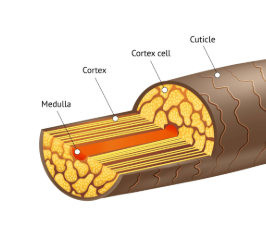
Each strand of hair is made primarily of keratin (a protein). The outer layer, called the cuticle, protects the inner cortex. When the cuticle is lifted or damaged, moisture escapes and the inner structure becomes vulnerable.
Healthy hair stretches slightly before snapping. Damaged hair doesn’t — it just breaks.
That’s why elasticity is one of the biggest indicators of hair strength.
To test your hair strength, take a strand of your hair and lightly tug on it. If it stretches a lot, that might indicate weak hair. If it barely stretches, it usually means you have decently healthy hair. If it snaps… well, you know what that means.
How to Prevent Hair Breakage
1. Moisturize Consistently- Use a hydrating shampoo and conditioner, and add in a leave-in conditioner. Then seal with a lightweight oil or cream to lock in hydration. Moisture is your best friend. If you’re looking to learn more about how to tell if you’re using too much protein or moisture, visit the blog linked to this post!
2. Reduce Heat- Air-dry when possible. If using heat, always apply a heat protectant and lower the temperature. Try to stay under 400 degrees with your tools.
3. Detangle Gently- Use a wide-tooth comb or detangling brush on damp, conditioned hair. Start at the ends and work upward. Hair is fragile when it’s wet — treat it with kindness.
4. Protect Your Hair at Night- Sleep on a satin or silk pillowcase, or wrap your hair in a satin scarf to reduce friction. Also, consider using scrunchies instead of regular hair ties. They are easier on the hair and cause less breakage.
5. Trim Regularly- Split ends travel upward. Trimming every 8–12 weeks prevents further splitting and breakage. I highly recommend going to a professional rather than cutting your hair at home. Professionals use super sharp shears versus the dull kitchen scissors you may have at home. Cutting hair with a dull blade can make breakage worse.
Repairing Already Broken Hair
Unfortunately, you can’t permanently “heal” a split end — only cut it off. However, you can strengthen the rest of your hair and prevent future damage.
Hair breakage is frustrating — but it’s also fixable. Healthy hair isn’t about perfection. It’s about balance.
When you treat your hair gently and nourish it consistently, length retention becomes much easier.
Until next time!
Your favorite crunchy cosmetologist,
Lane C
Comments